
Architectural & Tree Uplighting
Architectural & Tree Uplighting
Uplighting for the front of the house and the trees around it: stone, brick, columns and gables lit from below, and big canopies lit from above.
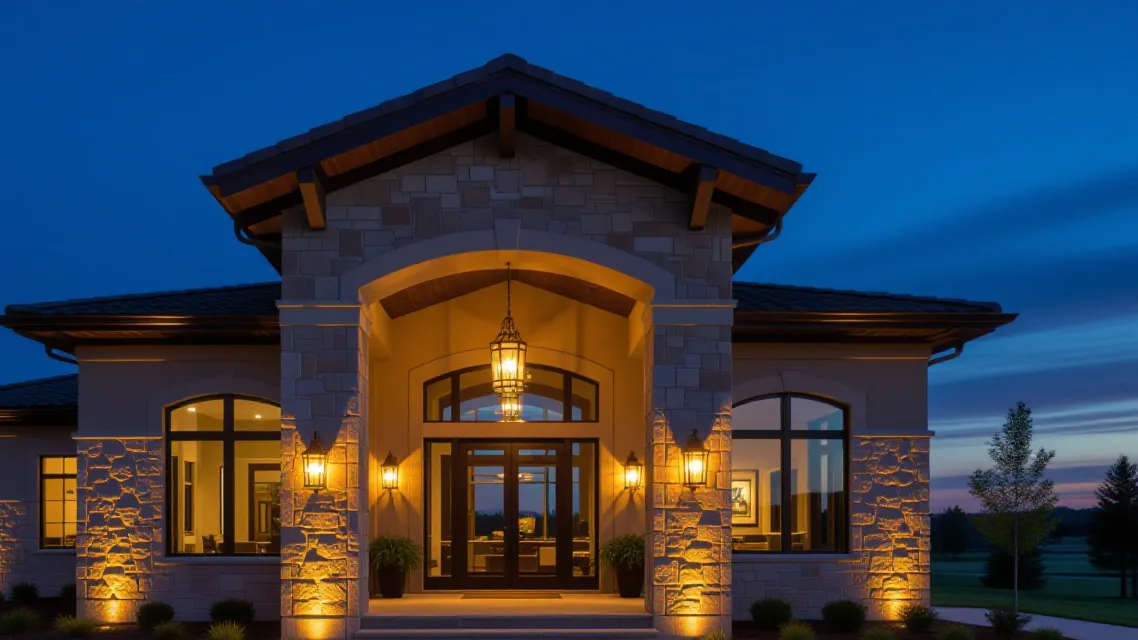
- Facade, column and gable uplighting
- Tree uplighting and moonlighting
- Grazing and wall-wash effects
- Balanced, glare-controlled beams
Light the house, not the neighbors
Uplighting is what gives a home real presence at night — washing the facade, grazing stone and brick, and lighting columns and gables to add depth. On trees we use uplighting and moonlighting (fixtures set high in the canopy for a soft, natural glow below). The skill is in beam spread and aiming so it looks intentional, not like a spotlight.
Curb appeal that pays off
A well-lit exterior stands out on the street and makes a home feel finished and secure. We balance the whole composition so no single fixture screams for attention — just a home that looks its best after sundown.
Uplighting around Nashville
Facades and specimen trees are lit in these 12 towns in 5 counties: Nashville (Davidson County), Franklin (Williamson County), Brentwood (Williamson County), Nolensville (Williamson County), Spring Hill (Williamson County), Hendersonville (Sumner County), Gallatin (Sumner County), Lebanon (Wilson County), Murfreesboro (Rutherford County), Smyrna (Rutherford County), Hermitage (Davidson County), and Mt. Juliet (Wilson County). Each town is on the service areas page.
Answers
Architectural & Tree Uplighting questions
What is moonlighting in landscape lighting?
Moonlighting means mounting fixtures high in a tree and aiming them down, so the light falls through the branches and leaves soft shadows on the lawn below, the way moonlight does. It suits big, mature trees and pairs well with uplighting on the trunk.
What is the difference between uplighting, grazing and wall-washing?
Uplighting aims a fixture up at a tree, column or gable from the ground. Grazing sets the fixture close to a textured wall so the light skims across it and picks out the stone or brick. Wall-washing stands it farther back for an even, flat light across a smooth facade.
How do you keep uplighting out of the neighbors’ windows?
With beam spread and aim. A narrow beam on a column and a glare-controlled fixture tilted toward the house keep the light on your walls rather than across the street, and the front is balanced so no single fixture stands out.
What parts of a house are worth uplighting?
The parts with depth or texture: stone and brick, columns, gables, an arched entry, and the specimen trees in the front yard. A flat run of siding with nothing to catch the light usually is not, which is why the design starts with a look at the house after dark.
Get a free lighting quote